One thing you hear time and time again with developers is that they want their game in front of their oh so favorite creators, Markiplier, Northernlion, Pokimane, etc. The reality of it all though is that there’s about a 1 in quintillion chance that you’re actually going to reach out and receive any confirmation that they care or even know of your game’s existence. That might hurt to hear, but at that level they are much more than creators. They’re a business, and your Care Bears survivors-like probably isn’t top of the list when it comes to things to cover (a Care Bears survivors-like does sound pretty sick though). Billy and Sally Bob Joe with 1k-15k followers are probably going to be more up your alley, and in the end, filling the space with your game and creating that SEO optimization is and SHOULD be the goal.
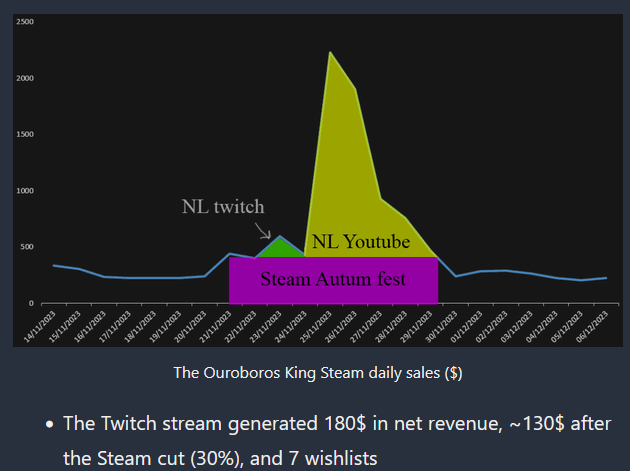
Developer and data scientist Orio Cosp, of The Ouroboros King, did a case study with NorthernLion and Aliensrock and came to the conclusion that a paid sponsorship amounts to next to NO increase in sales but does bring further awareness, which has a trickle-down effect. With a viewership of roughly 7k, Northernlion only had a 2% conversion rate when it came to sales, with $180 net revenue [Cosp, 2024]. I’m not saying don’t reach out to these creators, but absolutely don’t pay some HUGE lump sum just because you think Ludwig will get you rich quick. You’re much better off reaching out organically and creating relationships with these small to mid-tier creators. The goal is to build a library of content and relationships, not buy a lottery ticket.
Now that I have that short aside and yappathon out of my system… how about we get into the meat and potatoes and figure out how in the f*ck we’re actually supposed to reach out to these people? Where do we find them? How do we contact them? And what in the world is an embargo? Let’s dig in.
The How, Why, and Who…
As I mentioned before, one of the biggest problems first-time indie devs run into is that they’re glossy-eyed and bushy-tailed looking forward to Markiplier playing their brand spankin’ new roguelike deckbuilder, something that is… not happening… ever. Being realistic and reaching out to the appropriate audiences is more important than you could ever imagine. Spraying and praying works, BUT in order for that to actually accomplish something you’d need to send THOUSANDS upon thousands of emails. SO, how do you find your group of creators? How do you contact them? And what does that look like?
First off, before you even send an email you have to recognize what games are similar to yours. What are the comparables? If you have a Steam page up and running, then boom, you’re already ahead of the game, as there’s a nifty little site called SteamPeek. What SteamPeek allows you to do is search up any title on Steam and see direct comparables, what’s trending, what’s the most popular, and what are some titles you can take inspiration from. It takes information via tags and your store page and then compares it to every single title across Steam to determine what is the best fit for your game. Why is this important? Well, I’m so glad you asked. Finding comparables (specifically released titles) allows you to go to Twitch, YouTube, Kick, WHATEVER and find creators that have played those titles. Creating a list of people who play your genre is the perfect starting point. You don’t want to send your horror game with lots of blood and gore to a family-friendly cozy creator. There’s a 0% chance they’re going to cover your game. Wasted time and wasted effort.
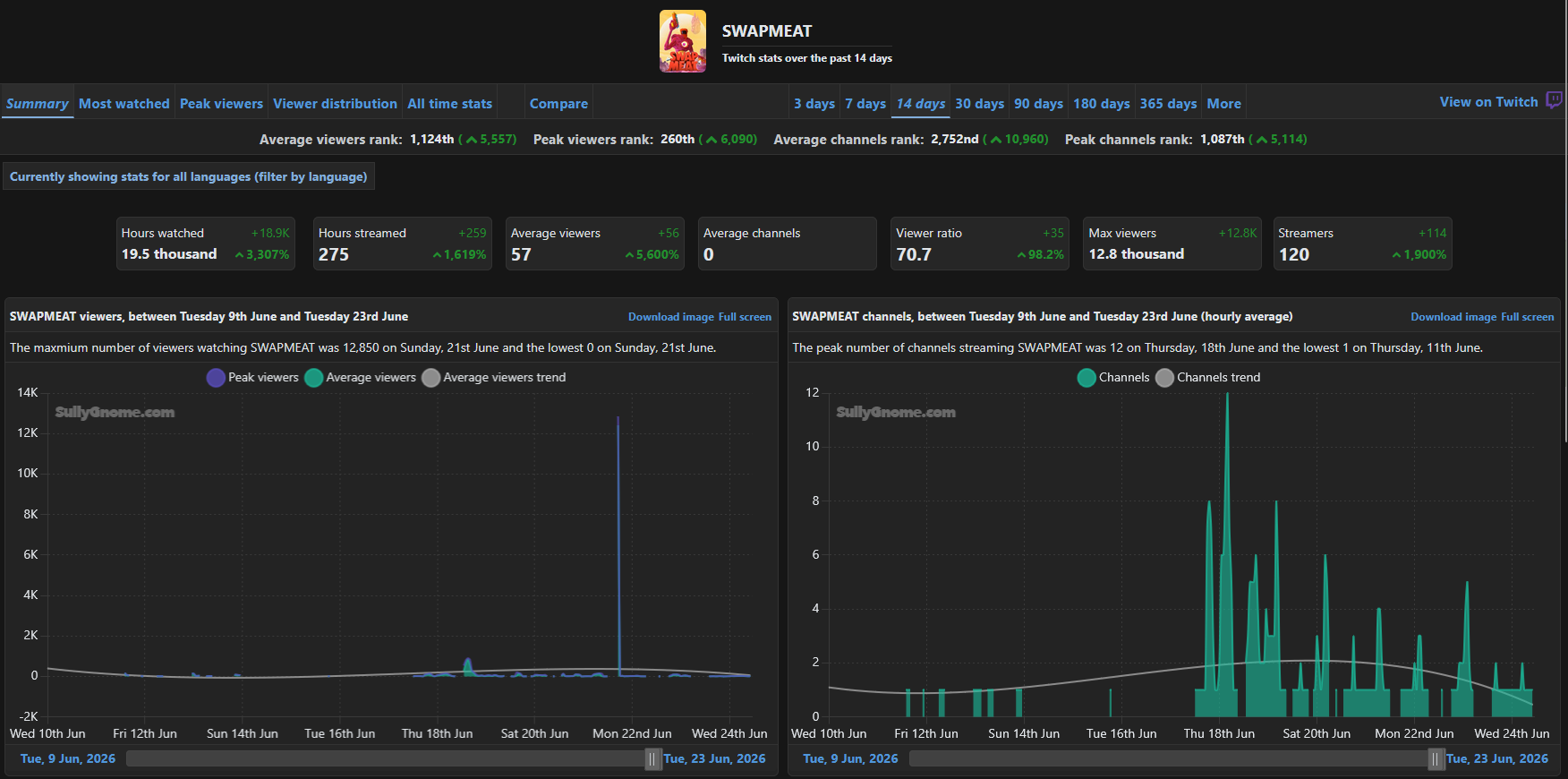
You now have your comparables, WOO! You are on your way to being a real boy! Just like SteamPeek, there are some awesome resources out there to source your newfound best friends (influencers) and scrape their emails off of the internet, you naughty naughty, smh. There are a few different ways to go about this, but I recommend a site called SullyGnome for Twitch. YouTube is a completely different beast that deserves its own specific article. SullyGnome allows you to look up your comparables and your game and see all the individual channels that have streamed that game: how long, for how many viewers, and how many channels decided your game was worth showcasing on their stream. This lets you see which channels you deem worthy enough to reach out to. Filter through average viewers and followers and start going ham looking at each individual channel, seeing if they’re a good fit for your content or not. This part is time-consuming, but it’s worth it, trust.
Now where do you go from here? It’s a big meme in the PR/IR community that creators want to be paid for their work but consistently hide away in a closet crying woe is me. Now, that might be a bit harsh, but the amount of creators who give next to no way to contact them is egregious! I understand privacy is a concern. Fans can be REAL weird. But when it comes to the business side of things, we need a way to make contact in order to create that relationship. That said, beautiful, wonderful creators tend to have their emails in their Twitch bio or panels, and these creators are a BLESSING. If they don’t have it there, you have a few options: check the X/Bsky/Facebook bio, and last but not least, check the YouTube about section. In a click economy this might feel draining and… it is! But in the long run, every creator you reach out to is an opportunity for your game to hit new audiences and make a bigger impact. The other option is that email isn’t their go-to and instead they want only social DMs. I would segment these people away from your email list, as it can get a little annoying when working with CSV files; mail merges tend to get angry with X links.
Speaking of mail merge, you now have your list and are ready to start sending those emails, PEW PEW PEW! But wait, you silly giddy guy. The list shouldn’t just sit by itself, you should segment it out and get that coordinated. Creating a list of VIPs can be a huge facelift for your campaign. These people should know your name or at least recognize your product. You should be interacting with them on socials, stopping in and watching their streams, engaging with their content. A stranger offering a service is nice, but we all delete 1k emails every day from randos. BUT an email from Sally Mc Sally Man that you met one time at a convention, and who you see keeps liking your stuff? There’s a good chance you might give Sally a little more wiggle room and open that email. Now, it doesn’t help that Sally can’t read or type and it’s complete gibberish, but at least you know for the future. Anyways, if you can, you should be sending individual personalized emails to each creator, and I understand there’s not enough time in the day to send emails every second and still cook, sleep, watch TV, think about life, and work on your game. You need something to help. If you have the funds or want to try a cheeky trial, there are a bunch of different mass mailing and mail merge sites such as YAMM, Brevo, Google, Sendy, MailChimp, etc. You don’t need the fancy MailChimp, but it definitely helps create pretty little lists and perfectly formatted emails. However, you can absolutely do that all by yourself; it just takes more work.
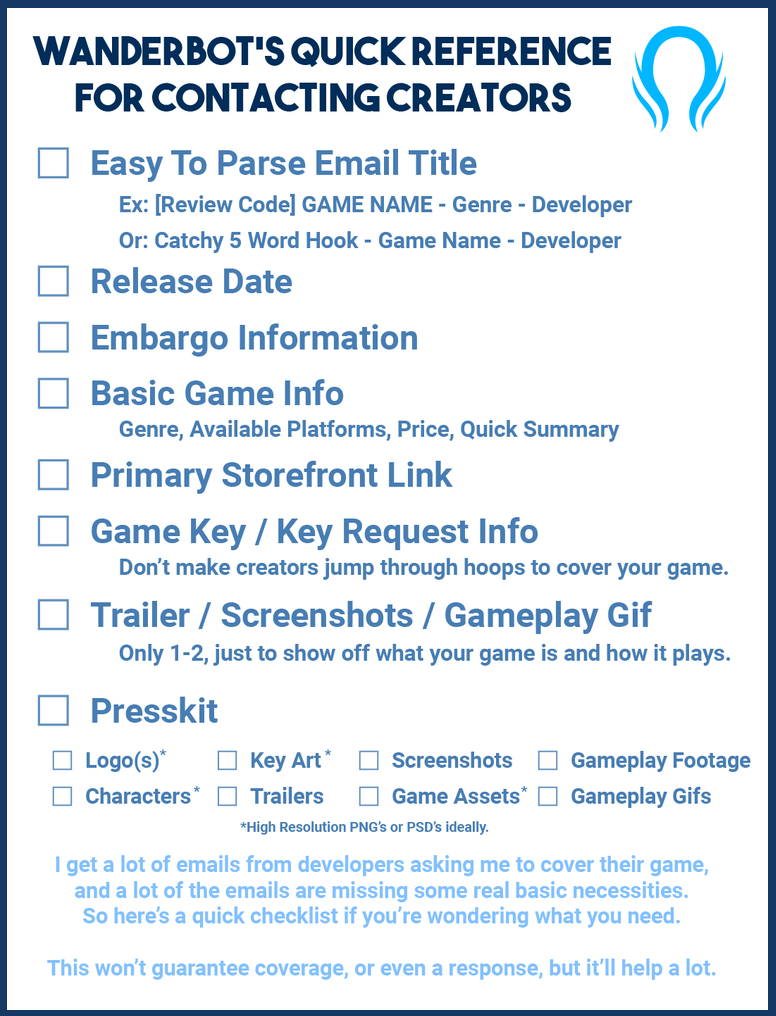
Now, how should your email look? That IS…completely up to you. However, there is a standard practice and little bits and bobs that you should include in each email, specifically if you’re asking someone to cover your game around launch with an embargo attached. You never truly know what will make someone click, but I personally would recommend giving a short intro into what your email is about, such as [KEY REQUEST/ENCLOSED], [REVEAL], [ETC]. Giving people the chance to quickly understand what they’re about to get into before even opening the email allows for a quicker turnaround on all parties. The body of the email is much broader and is up to your specific voice and game. What you include fully depends on the content you’re promoting, whether that be a demo, release date announcement, or Steam Next Fest reveal. Wanderbots, a well-regarded indie YouTuber, created a blog with specific templates for email outreach and press kits. I would definitely recommend reading through both of his articles, as understanding the creator side of things is incredibly important. Check out his checklist and templates here + here!
You’ve now created your lists, vetted your creators, and sent one million emails. Now what do you do? Keep it up! Responding to each email, whether it be a “nah fam,” a confirmation, or some other inquiry, is an opportunity to create a long-lasting relationship where they’ll cover your next game and the game after that. This space is built upon relationships, and maintaining those will benefit you more than almost anything else during this time. Creators aren’t always the thing that moves the needle and makes you a bajillion dollars, but they’re the ones that will help populate the internet, create content for people to watch, and give players opportunities to find your game. SEO is the name of the game, and the more you can fill the internet with YOUR game and its specific keywords, the better.
Congratulations! You did it…
Reaching out to people is scary, especially in a world where we’re becoming more and more secluded in our own little worlds. You’re going to mess up. You’re going to CC a million people instead of BCC a few different times. We’re all human, but we just have to keep on moving. Creating long-lasting relationships with people will always benefit you no matter what; even if they hate your game, maybe they don’t hate you! Identifying your potential audience of creators, recognizing the pillars of your game and why someone would want to play it, and sending well-thought-out professional emails is just the start of your game dev journey. Hopefully this article helps provide an easy starting point on creating your first influencer marketing campaign. WOOO! Go f*ck ’em up, you rapscallion. Go do big beautiful things. Keep me posted. 😎
– Xavier Stambaugh, Marketing Lead