Every year when it’s Spotify Wrapped time, I’m always excited to go through the little process with all of my friends– only to realize that the thing I’ve listened to most is some game soundtrack, because video game OSTs on loop soothe and relax my troubled mind. Well, for those of us who have an unhealthy addiction to OSTs just like that, there’s a pretty peculiar soundtrack coming up on the horizon. Painstakingly recorded, absurdly beautiful, entirely new renditions of 16th-century classical music.
Like so many things, Joe Richardson’s The Immortal John Triptych chooses to avoid the beaten path with the mind-boggling work of its composer, Eduardo Antonello.
If you aren’t familiar with Joe’s wildly imaginative brain, The Immortal John Triptych is the definitive collection of his narrative puzzle games (Four Last Things, The Procession to Calvary, and Death of the Reprobate). They are built entirely out of classical Renaissance artwork, letting you Monty Python your way through high-art exhibits. But visual collages are only half the experience. To truly ground the player’s chaotic agency, Joe needed an auditory tapestry of unparalleled elegance.
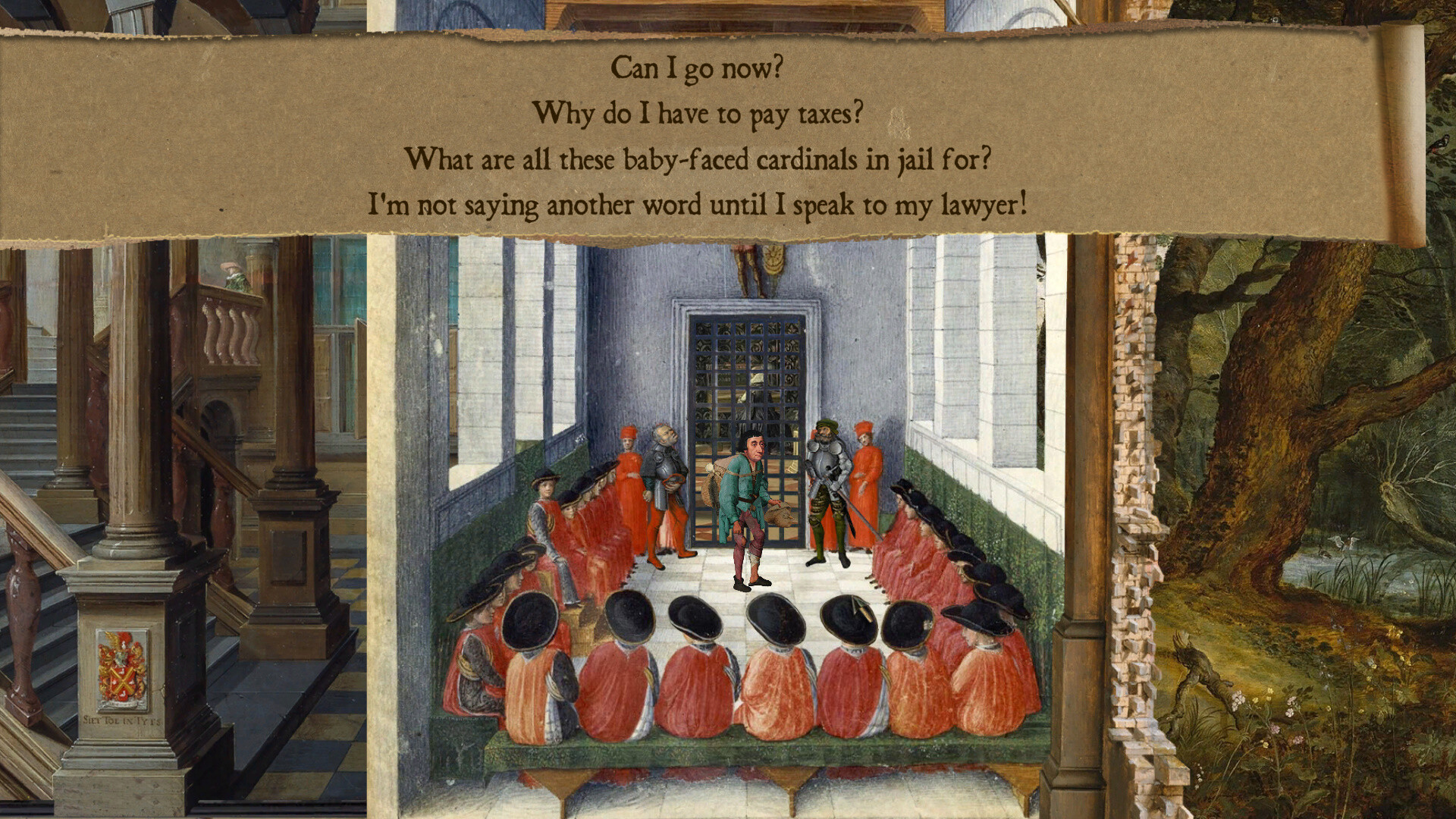
For two of the original games, Joe used public domain tracks in the same way he used the classic art. After all, shouldn’t a game that looks like it came from the 1600’s sound like the 1600’s sounded? But for the third entry, Joe wanted to push the envelope even further, so he brought on Eduardo for his unique multi-instrumentalist edge. Eduardo studied all of the classic music and instruments that made up the soundscape of the first two games and brought those learnings to bear on the soundtrack to Death of the Reprobate. This partnership has been so fruitful that it’s now culminated in another pairing between Joe and Eduardo. For the Immortal John Triptych, Eduardo rerecorded everything from the first two games as well, and I had the pleasure of picking his brain on how he pulled off that feat.
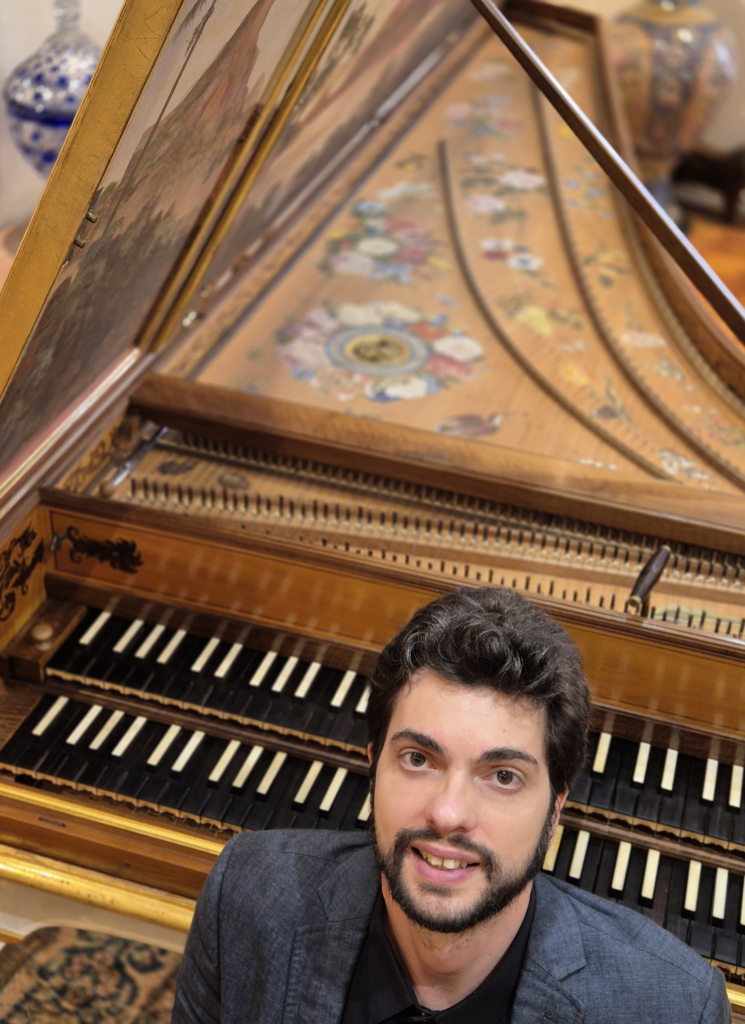
Eduardo’s love for early music started at age nine. While his opera-singer mother and pianist grandmother favored Romantic music, he was captivated by a Bach CD where the harpsichord in the background sounded “almost like little stars.” However, growing up in Brazil, he didn’t exactly have easy access to European instruments from four hundred years ago.
“I wanted to record some pieces that I really liked, just for fun, but there simply weren’t enough people available to play all the different parts with me,” Eduardo told me. “So I started recording everything myself.”
He began uploading his multitrack recordings to YouTube, which is exactly how Joe Richardson found him. Joe realized Eduardo’s music perfectly matched his own historical animations, proving they were completely on the same wavelength.
And that structure quickly became an important part of the joke at the heart of Joe’s games. In The Immortal John Triptych, the comedy lands so beautifully because of the juxtaposition. You, the player, are surrounded by the elegance and sophistication of the height of classical culture– and then, you lather it with disrespect and chaos. That’s funny! That’s part of what makes the games so memorable. The music, in turn, is what helps set that tone. It’s the straight man, the context that’s being set up to then get shattered by Joe’s perfectly precise punchlines.
Knowing that the music was there to play it straight, Eduardo tapped into a core tenet of classical repertoire that sounds almost counterintuitive: freedom.
“Early music allows for a great deal of freedom in improvisation and instrumentation,” Eduardo explained. “Very often, the scores are really just a skeleton or an outline of the piece, and it is up to us to bring that music to life.”
Eduardo and Joe took this to the next level. Instead of just picking standard instruments, they looked at the actual paintings Joe used for the game’s scenes and arranged the music specifically for the instruments depicted in the art. Every instrument Eduardo used is either a period replica or a historical original.
Being a solo dev is tough, but being a one-man orchestra comes with its own wild hurdles. Eduardo told me the hardest part wasn’t just switching between strings, keyboards, and winds, but recreating the natural spontaneity of human interaction. When you lay down track two, track one can’t react to your tempo changes. You are essentially trying to jam with a frozen recording of yourself. But in many ways, that’s exactly like video game development! In the same way that a developer writes lines of code and then they only come together once they’re compiled, Eduardo’s recordings are much the same.
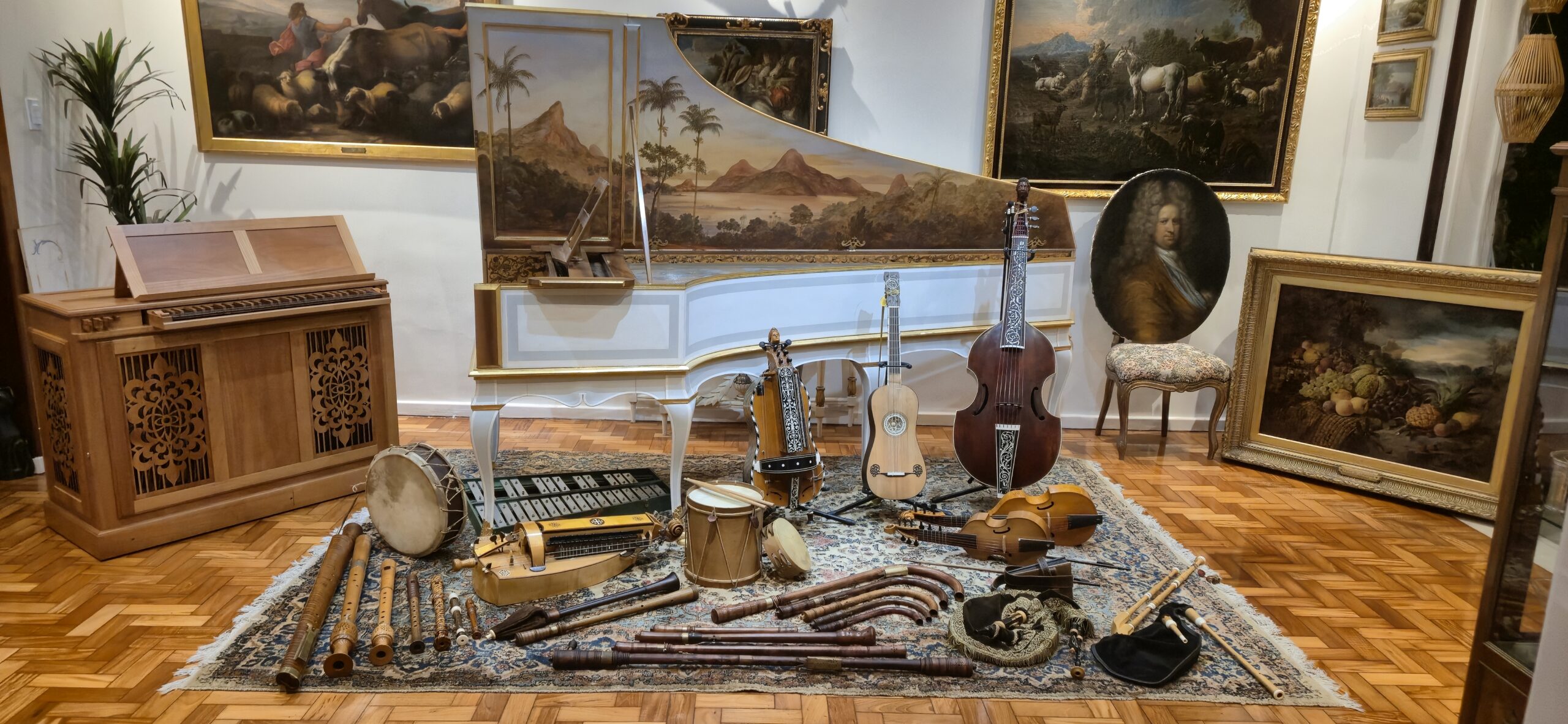
Even more, early music actually lends itself beautifully to the weirdness of video game development. Eduardo passionately believes instruments like the crumhorn (a 16th-century capped reed instrument) deserve to be in the 21st century. And to solve the classic game dev problem of making loops that don’t sound repetitive, he leaned heavily into his freedom of instrumentation, constantly varying the ornamentation so the loops seamlessly reset without the player getting aurally fatigued.
And, in keeping with Joe’s stylistic idiosyncrasies, Eduardo wasn’t afraid to get weird with it, either. “Quite often, in order to achieve the sound you’re looking for, you end up using resources or instruments that you wouldn’t initially imagine,” he confessed. On one track, he used his own rhythmic breathing as percussion. On another, he brought in the jaw harp. “In the end, the ear is the best judge– or, as they say, the ends justify the means.”
Eduardo actually slipped a massive Easter egg into the game for the keen-eared listeners: in one specific scene, he seamlessly transitioned a 16th-century composition directly into an original piece of his own making, as if they were the exact same song. It’s the kind of spontaneity that only comes out in the seamless world of video game music.
Which in turn, led to his ultimate advice for game composers working with historical music. “When this music was originally written… it was the contemporary music of the people who lived at the time,” he said. “It grew out of practice and out of people’s need to hear and experience music… Adapting ensembles, instrumentation, and timbres is completely valid– and, in a way, historically authentic. Making music for video games is really just a continuation of that process: adapting it to our own contemporary context and making the music live again.”
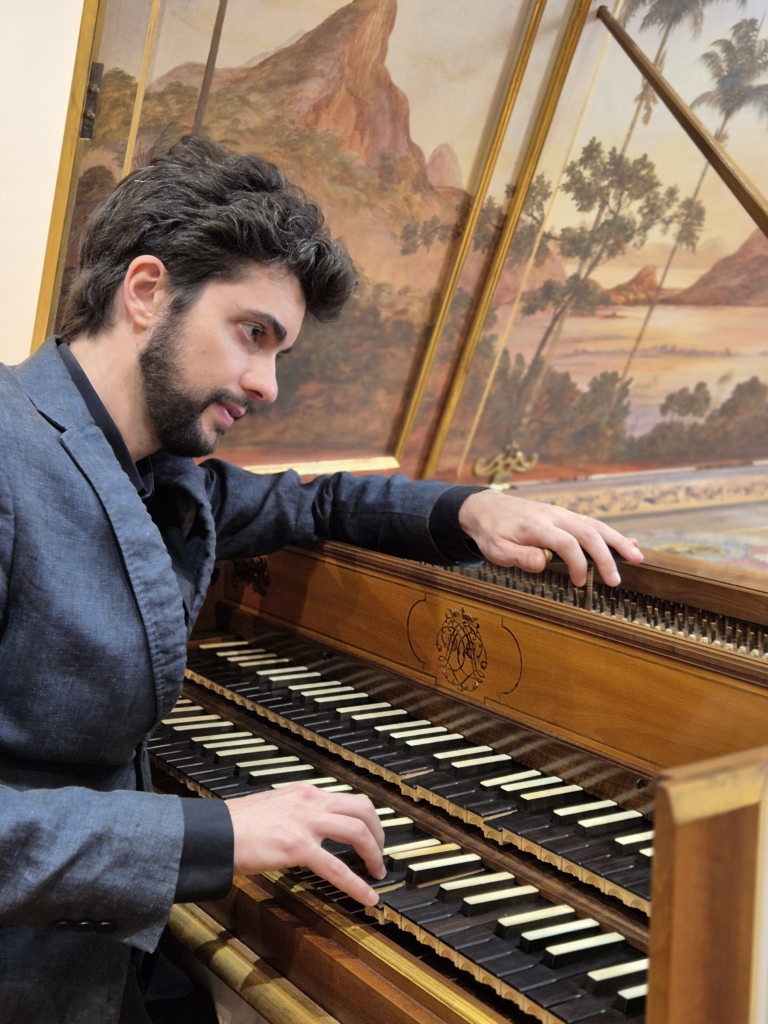
For many of us, these paintings and those compositions feel like something that will always be on a pedestal with a big plaque that just reads: “High Art”. But for Joe and Eduardo, the art and music of that day aren’t much different than the video games of ours. That’s something really beautiful in that.
The soundtrack for the Immortal John Triptych is available now on Steam, Bandcamp and a host of other platforms to enjoy!