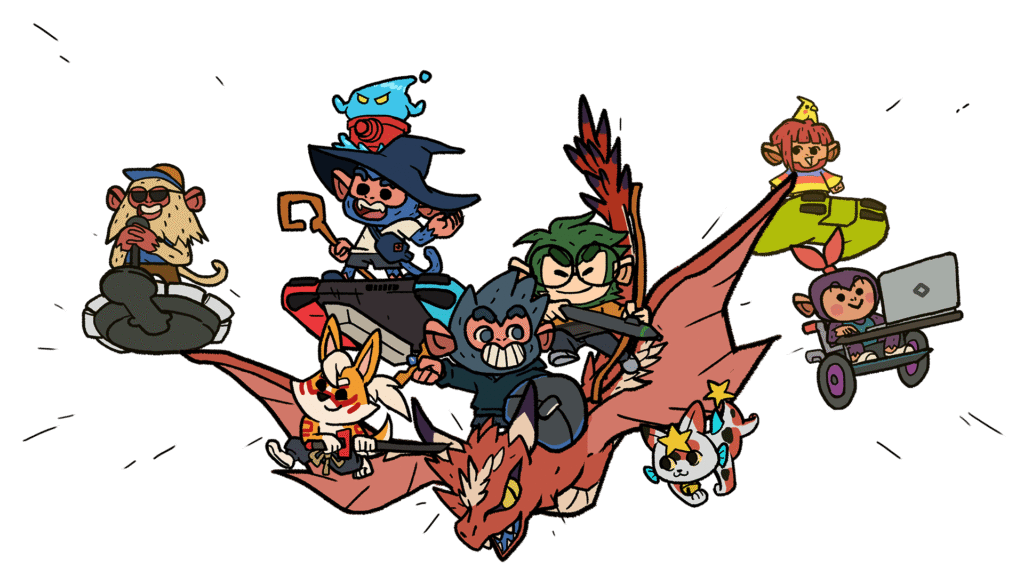
Founding Mankibo
“What if I made a company that’s different from my previous company?”
To say that Mankibo is a unique indie developer would be an understatement. Their leadership approach is unique. Their business philosophy is unique. Even the game they’re currently developing, Montabi, is unique. So, in a world where things so often can feel derivative, reheated, or even copycat, what is it about this small Indonesian development team that sets them apart? To understand that, you have to start at the top.
Boy’s Mankibo Avatar
In 2015, Boy Dozan (CEO of Mankibo) founded Joyseed; an award-winning mobile game development studio. Beginning with only $1400 in capital, he led the company to eventually win the best of 2020 from Google Play with Rocky Rampage. Over time, Joyseed grew to a staff of 18, Boy was honored with Forbes 30 under 30 Indonesia, and the company saw great success…but Boy felt empty, stuck. This strain eventually led him to leave the company and strike out on his own.
Given his previous success, Boy moved into this next phase with confidence. He wanted to learn how a large company thinks, become a professional, and take a bit of a breather. In this time, he interviewed at several companies: Gojek, Tokopedia, Google, and Riot Games. In spite of his expertise and success, however, he did not receive any employment offers.
After six months of repeating this cycle, Boy began doubting himself and his abilities. Was he not the superstar he previously thought? During this time, he began reading No Rules Rules by Reed Hastings. The book discussed talent density and companies always trying to hire superstars. It was at this point that the spark which eventually led to Mankibo’s genesis was ignited.
“What if I made a company that’s different from my previous company?” he thought. This was followed by more questions: “What if I made an open, inclusive company? What if we focused on giving opportunities to fresh talent instead of chasing superstars?” At Joyseed, he had ambitions to become one of the biggest and best in Indonesia, but now his ambition was to make an open and inclusive place where everyone, regardless of experience or even challenges like disabilities, deserves a chance.
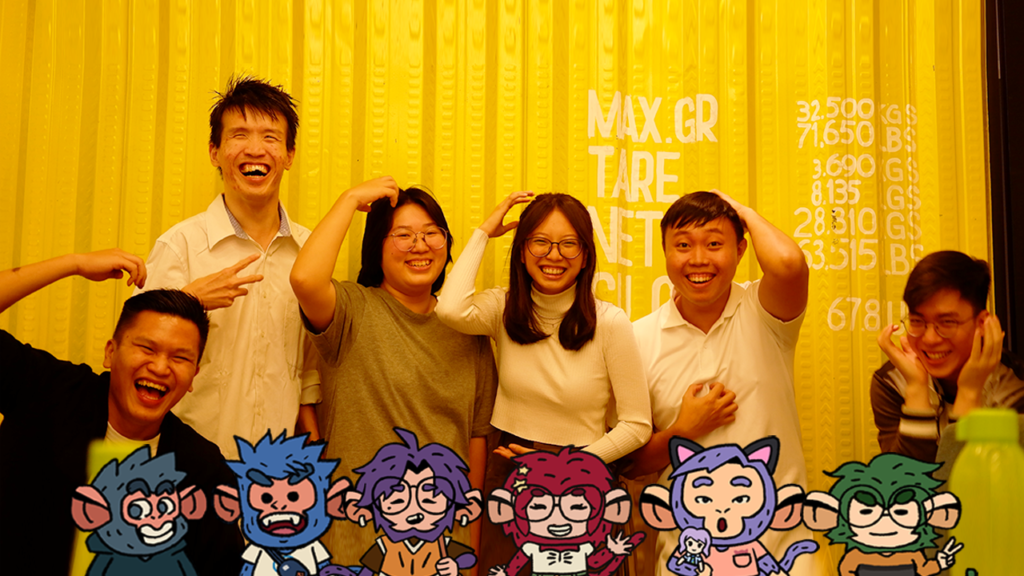
The Mankibo Team
These values became foundational for Mankibo: Everyone deserves a chance in the game industry, and everyone deserves to have fun playing Mankibo games. This is why accessibility is front and center at Mankibo, as the team plans to bring as much accessibility as possible to Montabi.
“Monkeys are playful, social animals that can accomplish great things when they work together.”

Ali’s Mankibo Avatar
In Indonesia, monkeys are seen as the underdog. This characterization aligned perfectly with what would eventually become Mankibo. Monkeys are playful, social animals that can accomplish great things when they work together. Boy wanted to build a playful group of unexpected talent that could come together to make great games.
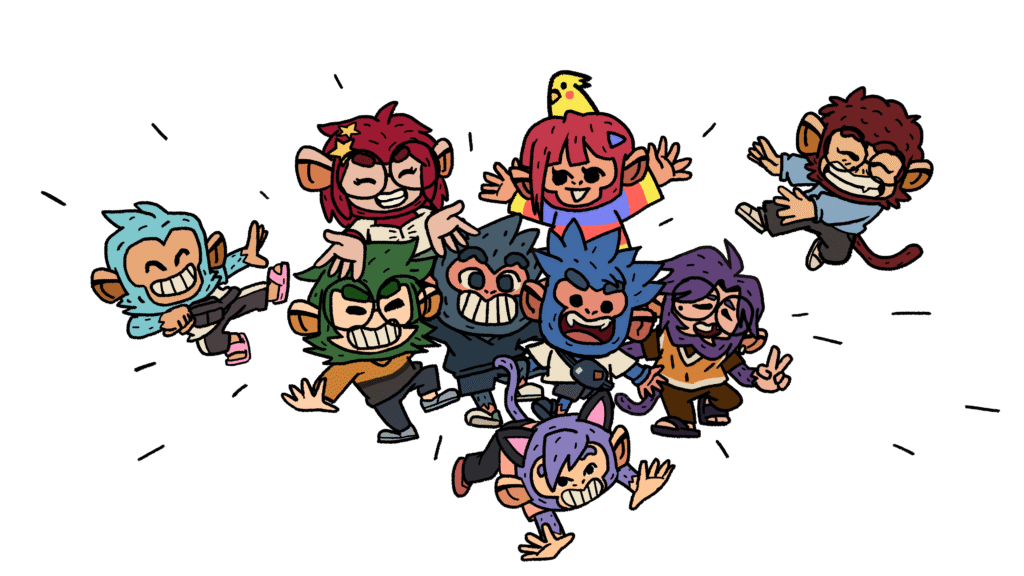
“We chose ‘Mankibo’ because it’s a more catchy way to say monkey,” said Boy, and he is definitely onto something as the monkey characterization certainly resonates with the Mankibo team. “I like to be a monkey! I really like that mascot!” said Ali Jaya Meilio (Game Designer). Each member of the Mankibo team receives their own personalized monkey avatar to represent themselves visually. Ali’s wears a chef hat, as he also does cooking around the office, and has a big mustache.
“The monkey avatar is also one of our unique selling points,” said Audi Anindita (Game Artist), whose avatar has a parakeet on her head. When hiring interns, they asked why people wanted to intern at Mankibo. She explained that multiple people answered, saying that they wanted their own monkey avatar. “Like, oh my God, you just want to join Mankibo because you want to have a monkey avatar? I mean, that’s valid. Who doesn’t want to have a monkey avatar? It’s something that is personal and you can make however you like!”

“My avatar has a big nose,” said Oliver Kane (QA) whose avatar stands, arms crossed, with a sly expression, sporting a rather generous nose. “At first, I thought the artist didn’t want that in my avatar, but I was like ‘No, no, it’s okay to have a big nose on my avatar!’ They said ‘Okay! If that’s what you want!’ I’m glad that my avatar can represent my appearance.”
Making Montabi
“I found that deckbuilders are mostly challenging while most of the monster taming games skew to a younger audience where the challenge is designed for everyone, especially a younger audience.”
In the beginning, Montabi was conceived as a game in the vein of Monster Rancher, where you need to train your monsters for battle. But as time went along and they worked at adapting the core loop to try to make it fresh, it just wasn’t shaping up how they envisioned. “As a small team, it’s really hard to make an adventure RPG game like other monster tamers. So we wanted to focus on the battle first and what the core loop will be. We decided to do a roguelike because the core loop isn’t really big where you need to adventure, exploring and everything.” said Boy. The team also realized, while Monster Rancher was popular in Japan, western audiences wouldn’t relate in a similar fashion. In spite of these things, the team still loved the Montabi universe and continued to adapt the game.
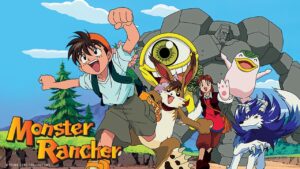
A roguelike Pokémon fan game called PokéRogue served as inspiration to combine monster-taming with roguelike elements, leading to the next iteration of Montabi as an action/skill-based roguelike where each Montabi has a skill. “Maybe something similar to Aethermancer,” Boy said. As they continued this path, they feared that people would focus on uncovering the optimal combo and simply use that combo every time. This was when they first thought of bringing in the deckbuilder element.
Boy liked these two genres and believed people would enjoy seeing them combined. “I found that deckbuilders are mostly challenging while most of the monster taming games skew to a younger audience where the challenge is designed for everyone, especially a younger audience.” PokéRogue successfully amped up the challenge level of Pokémon, so how could they add a new challenge to the monster-taming genre? Boy explained, “Imagine you are deckbuilding by team building. You need to do team building first. You pick your Montabi and you build the deck around that same synergy. I think this shows how a roguelike deckbuilder can bring a fresh, new challenge to these genres.” Ali chimed in, explaining that there are complexities involved in pleasing both the creature collector gamer and the roguelike deckbuilder gamer, but that the team welcomes the challenge and is excited to integrate these elements into Montabi.
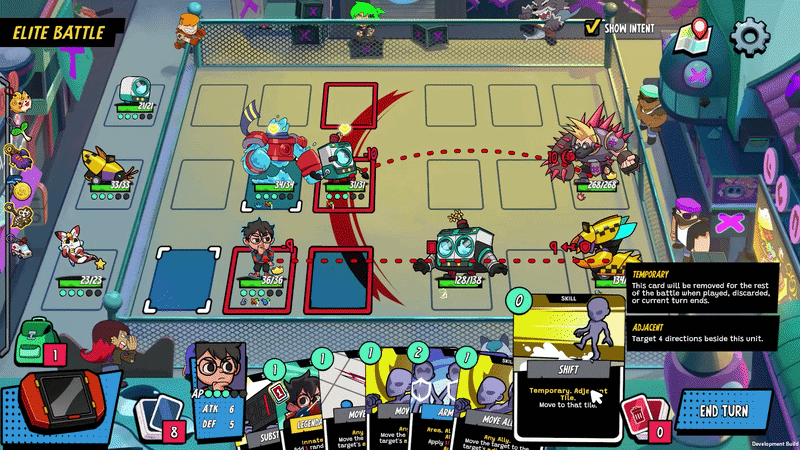
“The hook of our game is the positioning of characters.”
The team wanted to incorporate a positioning pillar in the game from the beginning. Since the game was originally conceived as a turn-based roguelike, the positioning element was something they felt would make the battles unique and fresh. Drawing inspiration from Megaman Battle Network, they implemented a 3×3 grid into the real-time battle. Ali explained: “I think this is a clever addition to the game because I’ve seen many players that relate to that. It combines turn-based combat with the real-time aspect. I think this is a unique take on the deckbuilder genre because in most roguelike deckbuilders, one character fights another character, or there may be multiple characters, but the positioning isn’t really important. The hook of our game is the positioning of characters. There’s more layers to the gameplay.”
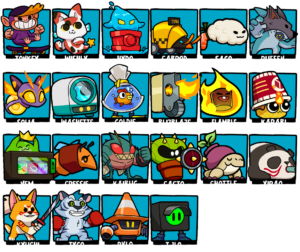
But just as important as the gameplay elements are the Montabi themselves…which are incredibly endearing. Part of what makes them so endearing is the fact that many Montabi come from everyday items the team sees in the city; things like fire hydrants, washing machines, or even food, like sushi. Boy explains that this is all done on purpose. Much like the diversity found in Pokemon, the Mankibo team wants Montabi to be extremely diverse so everyone can have a favorite!
Audi explains how they have a high level design brief from the design team that is then expanded upon naturally from the attributes of the original idea. Whether it’s a panda, a monkey, or a vending machine, everything from their appearance, personality, attacks, and more all tie back to the original idea of the Montabi.
Mankibo, Akupara, and the Future
“I really believe that Akupara sees us as being in this together.”
“Partnering with Akupara was our pleasure. It was an honor for us that Akupara partnered with us for Montabi. I always heard Akupara was a supportive and indie-friendly publisher. I can guarantee that’s 100% accurate. We are very happy working with Akupara.” explains Boy. He goes on to explain a situation that took place previously where the team experienced some difficulty and was unable to meet a certain milestone on time. However, even though it may not have made sense from a business standpoint, Akupara still offered to send the needed funds. This really resonated with them as a team.
Boy went on to describe previously published Akupara games, Astrea and Zoeti, and how he felt our players would understand and enjoy Montabi, a sentiment that we happen to share! The team at Mankibo is excited and hopeful for players to enjoy the different playstyles, experience all the different Montabi, and find their own favorites. Ali states, “I think this is the kind of game where you can spend hundreds of hours playing without realizing it. There is tons of replayability!” Boy ended by saying, “What’s most important to us is the player experience. As a developer, that is what fulfills us: Making games people enjoy and anyone can have fun playing!”